




Want better sleep? Avoid the weed.

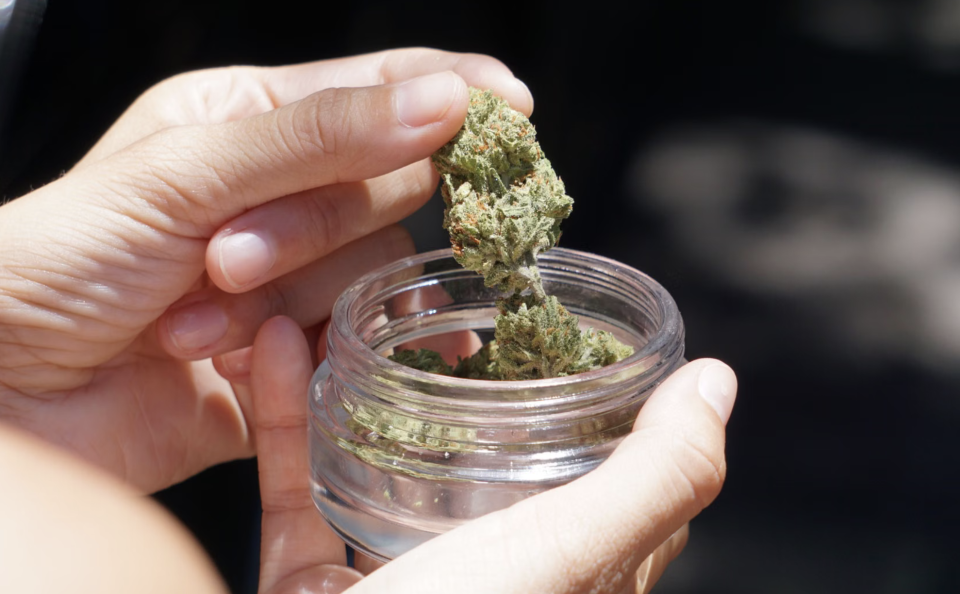
Since laws against marijuana use have been relaxed or done away with altogether, it’s astonishing to see how many dispensaries have appeared over the last few years. Equally astonishing is the variety of products available—gummies, baked goods, tinctures, and, of course, the smokeables.
Some of these items are marketed as sedatives that promote better sleep. In fact, I’ve spoken to people who say that without a marijuana-based product, their sleep is guaranteed to be poor.
However, a 35-year study reveals that both lifetime and newer users of these products have significantly worse sleep quality in middle age.
Researchers tracked marijuana use for nearly three and a half decades as participants aged from young adulthood into midlife. In middle age, 1,266 participants wore sleep monitors for seven consecutive days while completing comprehensive subjective sleep questionnaires. This allowed the researchers to compare physiological sleep data with participants’ subjective perceptions.
The monitors showed that participants with greater lifetime use spent less time asleep (reduced sleep efficiency), woke more often (higher sleep fragmentation), and stayed awake longer after sleep onset.
Recent marijuana users displayed similar sleep disturbances and were also significantly more likely to sleep longer than eight hours per night, a pattern frequently linked to non-restorative sleep cycles and hypersomnia (extreme sleepiness during the day despite “healthy” amounts of sleep).
Surprising to the scientists was that despite the physiological data showing fragmented, low-efficiency rest, participants who used marijuana did not rate their sleep quality any lower than non-users on clinical surveys.
“This was one of the most interesting findings,” said author Thanh-Huyen T. Vu, MD, PhD. “The wearable device detected more nighttime disruption among participants with long-term cannabis exposure, but the participants themselves generally did not report worse sleep.”
The researchers speculate this disconnect suggests that while marijuana may induce sleepiness or lower conscious awareness of overnight awakenings, it disrupts the cycles of restorative sleep beneath the surface.
Said senior author Mercedes R. Carnethon, PhD, “Our data do not support the belief that cannabis is helpful as a sleep aid.”
Importantly, this persisted even after accounting for several variables, including biological sex, race, depressive symptoms, physical activity, alcohol consumption, cigarette smoking, and prescription medications.
So, with users’ perception that marijuana brings better sleep seemingly “up in smoke,” we have the actions that science supports:
Consistent bed and wake times;
A dark, cool bedroom (65-68 degrees);
No alcohol before bed;
Reduced nighttime screen use;
Pre-bed mediatation/relaxation breathing.
Also, direct morning sunlight for 10-20 minutes shortly after waking helps regulate circadian rhythm cycles.
I’m curious to hear your thoughts on this study, as well as the changing marijuana laws. Also, if you have a go-to strategy for quality sleep, please share.
 |
 |
|
|
|
|
Slipstream
Marijuana gives me the munchies, but no snoozies. I have a friend that finds CBD helps with her sleep. I've tried it, but it didn't work for me. The steps you mention seem to be the most logical, but don't always work either. Having a calm, quiet brain helps me the most. Not carrying my to do list, or my "worry" list with me to bed brings about the best sleep for me.
Well Street
A "worry journal" is recommended by some sleep experts. Writing down the concerns before bed can lighten the mental load for some people. They also say it's best to write them down versus typing.
It's too bad there isn't a universal solution that works for everyone. Some day, maybe.
Evangel
Worrying about things is probably the most common thing that keeps people awake. Worrying, we all know, solves nothing, but it's a very human thing to do—so there's likely a purpose to it. Perhaps it makes us reflect on things we ignored or could have done better. When I can't sleep, it's often because I'm not sleepy enough, even if it's 1:00 a.m. Other times, no problem falling asleep. Thank God I never liked weed.