




It’s not just what you eat, but how you eat

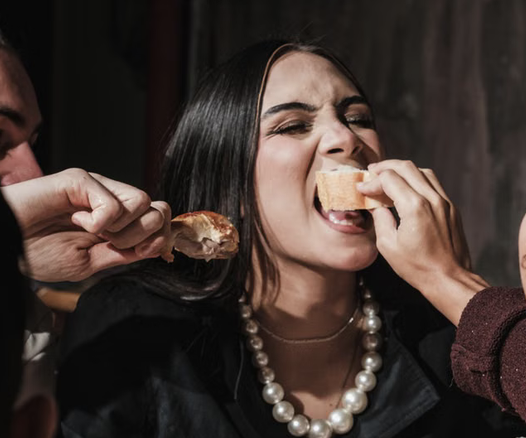
Like me, you’ve probably never woken up feeling your best after a calorie-dense Mexican dinner that left no open real estate in your stomach. I’ve often told clients that how well our bodies function and how we feel overall is governed by the quality and quantity of food we consume.
Over the course of my career, I’ve worked with hundreds of people wanting to reduce their body fat. Not surprisingly, most assumed they would have to change everything about their diet, including never being able to enjoy a dessert or glass of wine. After learning about their nutritional habits, the first course of action was more often than not to modify how they ate, not what they ate.
What do I mean by this? Over the decades, the pace of our lives, with their never-ending responsibilities and to-do lists, has become progressively faster and more hectic, and so too has the speed at which we eat our meals. Unfortunately, when we regularly eat as if we’re trying to set a world speed record, there are consequences to pay.
Eating quickly prevents the stomach and intestines from telling the brain they’ve had enough, which often leads to overeating. Done consistently, we know how this affects body fat and waistlines. When those go up, risks to our health climb too.
Food not chewed thoroughly overworks the digestive system and may reduce nutrient absorption. Swallowing large bites can also worsen acid reflux and, something many don’t consider, increase the risk of choking.
The nervous system can interpret hurried eating and the accompanying shallow breathing as a stress and threat response. This risks initiating a fight-or-flight state that increases blood pressure, heart rate, and cortisol production, further inhibiting healthy digestion.
Then there’s the fact that eating is simply less enjoyable when finishing our meals in mere moments. Who knows how satisfying the food was when we barely tasted it?
Learning to eat more slowly can be considered “simple, but not necessarily easy.” After all, if eating rapidly has been the norm for years, it’s going to take mindful practice to change that.
Of the strategies I’ve recommended over the years, there’s one that stands above the rest. It’s what I call the Mealtime Motto: “If there’s food in my mouth, then there’s no food on my fork.”
The Mealtime Motto brings heightened awareness and checks several boxes. It keeps food from being shoveled into the mouth and stomach; it slows chewing and brings more attention to the meal’s texture and flavors.
While genuine time constraints and life stuff make it impossible to do this at every meal, perhaps you can try it at dinner a couple of nights, and if it’s a good fit, build from there.
Other strategies include:
Putting the fork down between each bite.
Aiming for a 20-minute meal duration.
Ensuring you’ve finished the previous bite before taking another.
Making meals smartphone and distraction-free (this is a tough one for many to swallow, pun intended). If this feels too extreme, the Mealtime Motto still delivers results even with the TV on.
I’m curious to learn your eating style. Is it similar to taking a leisurely stroll, or could you be nicknamed “greased lightning?” I’d love to hear your thoughts and whether the Mealtime Motto is something you’d benefit from.
 |
 |
|
|
|
|
Wonderland
Well, this is right up my alley. I have watched my weight all of my life.i thought I needed to diet when I was thin, and I knew I needed to diet when I was heavy. My dad’s side of the family was overweight, so I was probably overly concerned with weight most of my life. I even wrote a blog about losing weight. Long story short, I am not a fast eater, I enjoy my food, I just watch what I eat now. I still enjoy a cocktail, and plan my evening meals. I try to eat at home. I still get take out, but I am careful about what I order. I try to eat Whole Foods. I try to eat 800-1000calories, 90 grams of carbs or less, protien, 70 grams or more, and 10-30 grams of fat. I’m not real careful anymore, but I do think about it daily!
Well Street
It sounds like planning comes naturally to you, and this is an asset in developing eating habits that support good health.
Evangel
Maybe you should continue your blog, adding your old posts or new right here on Youtropolis so we can all learn from your experience.
Present Valley
Thank you. What a great comprehensive, helpful post. Chock full of
useful suggestions. I really like the mentioning of what happens with the nervous system when we engage in hurried eating.
Because of my years long dance with food allergies I have learned to pay close attention to what is happening in my digestive system. I'm a leisurely stroll kinda gal when it comes to eating. I appreciate your Mealtime Motto it is a good one to integrate in my meal times.
Well Street
I've known a few people with GI challenges, and they've all had to approach meals with a delicate touch. I hope that, more often than not, you're able to successfully navigate the digestive unpredictabilities and I'm glad the Mealtime Motto resonated with you.
Evangel
Does one's hunger have anything to do with gobbling food? I've observed people eat dinner like they hadn't had a meal in days (maybe my dinner was that good), and others pick at their plates while busy talking. I've finished an entire meal while the person sitting across from me talked through the whole meal with their fork up with the first bite still uneaten. I try to keep pace with seated dinner guests, but sometimes they're so slow, and others times too fast. So maybe I'm somewhere in between.
Slipstream
Even though I eat leisurely, I find that my mind isn't always on my food. I can be watching TV or mentally problem-solving, then realize I've finished my food. So being present and paying attention to my thoughts are at the top of my list as I leisurely eat. Thanks for this article; very informative and enjoyable.