




Can helping others help your brain?

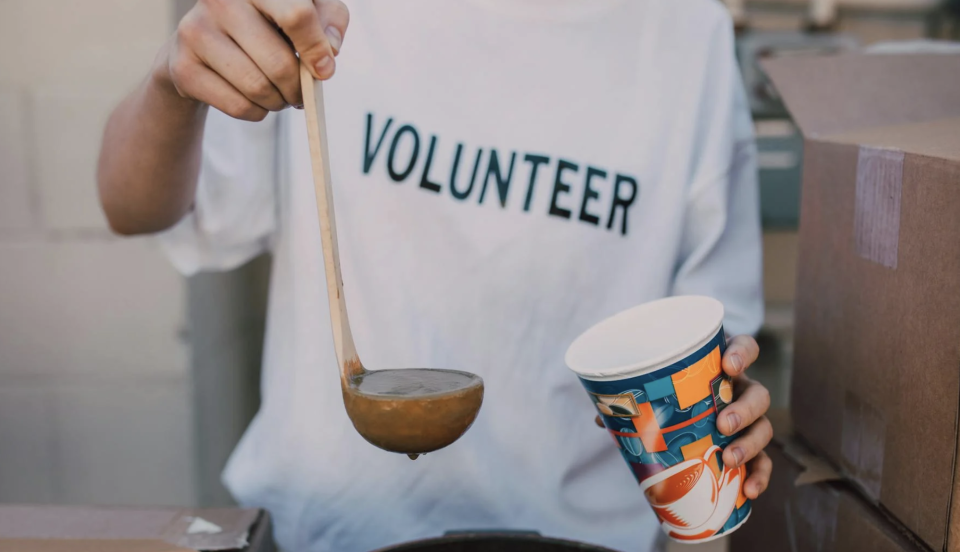
The soul-enriching benefits of being of service to others have been discussed frequently on Youtropolis. In addition to feeling good about oneself, new research has revealed that volunteering can reduce cognitive decline in older adults.
Researchers have long known that "cognitive reserve" can protect brain function. Cognitive reserve is the brain's ability to find new or alternative ways to complete a task. It functions like a bank account—the more reserves you build, the more you can withdraw as your brain ages.
To understand how it works, consider vocabulary. The more words you know, the easier it is to think of an alternative word when you can’t come up with the word you actually wanted.
The majority of our cognitive reserve is developed during our youth. However, some cognitive reserve-building practices still provide benefits later in life, including volunteering.
Over the years, many studies have looked at the brain-protective effects of formal volunteering, including among older adults with mild cognitive impairment.
But scientists from the Universities of Texas and Massachusetts wondered: Could even simpler acts of helping others, such as shoveling the snow off a neighbor's front steps, be just as protective as serving meals at a shelter?
The research team amassed two decades' worth of data from the U.S. Health and Retirement Study (HRS). This ongoing data collection effort surveys adults 50 and older every two years about their employment status, health, income, and cognitive functioning.
Additionally, participants answer questions about formal and informal helping, including:
Have you spent any time in the past 12 months doing volunteer work?
Did you spend any time in the past 12 months helping friends, neighbors, or relatives who did not live with you and did not pay for the help?
Participants estimate the number of hours per year they perform these helping tasks. The results showed that, on average, participants performed better on cognitive tests if they'd volunteered formally. Sustained volunteering of two to four hours a week led to a 15-20 percent slower rate of age-related mental decline.
Similarly, the research revealed that informal volunteering has a positive effect on the brain.
As with formal volunteering, starting a new informal helping initiative, i.e., offering to care for an aging neighbor's lawn, was associated with higher cognitive functioning.
Lastly, transitioning into any amount of helping, both formal or informal, was brain-protective, with the degree of protection increasing as the number of volunteer hours increased.
I’ll be helping a friend move to a new apartment this weekend, so when I’m navigating the couch through a narrow doorway, I’ll try to remember how good it is for my brain.
 |
 |
|
|
|
|
Present Valley
Thank you for taking the time to post this article. It makes so much sense. I like the "vocabulary" analogy.
Wouldn't it be great if more people got involved in volunteering and service participation....I have this fantasy that more people could postpone cognitive decline and we would be happier human beings. Like I said...my fantasy.
Meanwhile I'm hosting my dear friend with dementia for a few days and we are both going to benefit from our interaction...she feeling loved and cared for and me...well now I know my brain will benefit.
I hope you successfully navigated that couch! You are a great friend to do that.
Well Street
I hope the time spent with your friend will be enriching.
Slipstream
People of all ages benefit from volunteering. Kids and seniors thrive on this activity. It's a win-win for everyone.