




You're being human, and you're not alone.

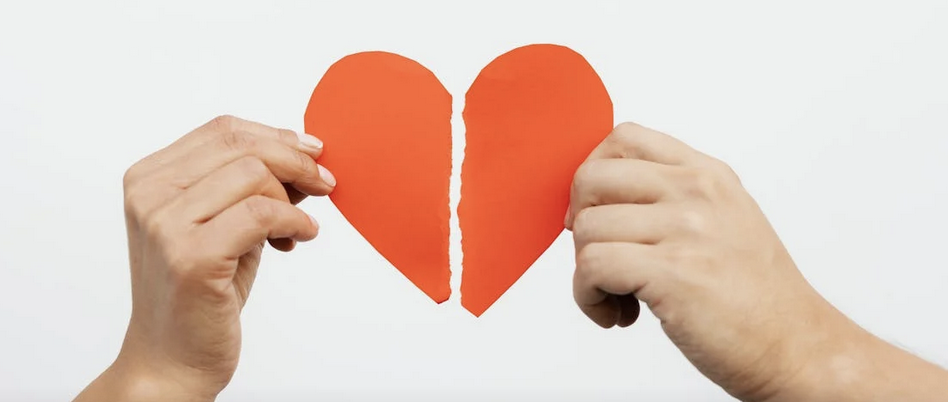
A year ago, my client, Tony, age 25, broke up with his girlfriend. They met in college in New York, and for each of them, it was their first relationship.
A few months after graduation, Tony accepted a job at a video game company in Los Angeles, and the two of them agreed to a bicoastal relationship. But the separation in miles created emotional distance.
Ultimately, Tony struggled to find reasons to make the relationship work and ended it.
When he showed up for his workout last week, the expression on his face and his slumped shoulders suggested he was carrying some heavy emotions. Instead of getting on the mat to begin his warmup, he sat down and asked if we could talk.
Tony said he’d reached out to his ex that day to see how she was doing, but also with the intention to potentially re-establish ties. He told me that after their breakup, he believed in the back of his mind that if he ever wanted to get back together, the door would be open. He learned, however, that the door was, in fact, closed. His ex said she was content without him.
Tony told me he was confused, not necessarily by what she told him, but by how it was making him feel. He struggled to name his emotions because they felt foreign.
It turns out, as Tony explained, that when growing up, his parents worked very hard to shield him from anything that would cause difficult feelings, such as sadness, disappointment, and anger. On those rare occasions that their efforts failed, they did all they could to distract him with toys, video games, or treats of some kind to minimize his “negative” experience.
Now, years later, he sat in the gym feeling a mixture of shock, sadness, guilt, and disbelief, struggling to identify and process them. With desperation in his voice, he said, “I don’t know how to feel or what to do. Is this normal?”
I told him, “You’re being human.” He pondered that statement for a moment and asked me to say more. I continued, “Try to imagine how many songs you’ve heard about heartbreak. Even though this feels foreign, it’s completely normal and something we all go through.”
I didn’t sugarcoat what was ahead of him in terms of the emotions he’d face, but assured him this was temporary and a necessary part of his personal growth process. I told him he could avoid prolonging this difficult time if he’d consider journaling, leaning on friends, and resisting the urge to distract himself with endless scrolling and video games.
Learning he wasn’t alone in this experience brought some clarity and a small amount of relief, and he thanked me for my help.
Driving home, I reflected on our conversation, grateful that Tony trusted me enough to be open and vulnerable. I acknowledged the heartbreaks in my own life, the wisdom gained from them, and how, through that wisdom, I could support him.
It was also a powerful reminder of how our anxieties and catastrophic thinking can be cooled with the acceptance that “Others struggle with this, too. I’m not alone.”
 |
 |
|
|
|
|
Faithville
What an action of trust that he shared with you. Surely your empathy and words helped him, immeasurably.
Well Street
Thank you.
As a personal trainer, I use the mistakes and lessons from my own fitness journey to guide my clients. Occasionally, life lessons work their way into my sessions.
Present Valley
How very fortunate Tony is to be your client. Witnessing with someone their pain is one the most powerful healing potions we can give another. Being told you are human, what your feeling is normal and you're not alone...well, that is simply priceless. What a gift you gave him that day.
Slipstream
It's an honor to be a confidant. Tony felt safe and knew you would listen without judgment. Maybe he will do the same for someone else someday, and your goodness will spread. We need more people who show your humanity. Thanks for sharing your story.