




The Best Display Of Love Of Country

In the mid-1700s, American Revolutionaries were opposed to the idea of being ruled by a king. The great orators of that time evoked those passions by speaking out against the three ills that have no place in public affairs.
The first ill the colonials pointed to is excessive power.
Historian and Professor of History R. W. Whalen, explained it this way in his speech, Roots and Wings, What Then Is Honor? "They were sure that power's natural prey was liberty, that power was driven by its very nature to choke, to rend, to deracinate liberty."
The second ill they railed against is appetite.
Appetite fueled power. We might call it a hunger for power, even an addiction to it. Unmanaged, the revolutionaries believed it produced debauchery and a tyrannical government.
“Appetite is not easily satisfied,” Whalen said. “Restraining it is hard. Appetite paralyzes industry, freezes courage, purges memory, obscures hope. As Shakespeare's Ulysses says, appetite is 'a universal wolf,' which unchained, will in the end only devour up itself."
Madness is the third and most dangerous ill assailed by the orators of that time. They were not referring to anxiety or depression, but to the madness of the soul.
Whalen summed this madness up as the “inability to distinguish right from wrong, true from false, the wild inflating of the self, driven by appetite and lust for power which produces despotism, anarchy, and tyranny.”
Put another way, power feeds on appetite, and appetite, unrestrained, leads to madness.
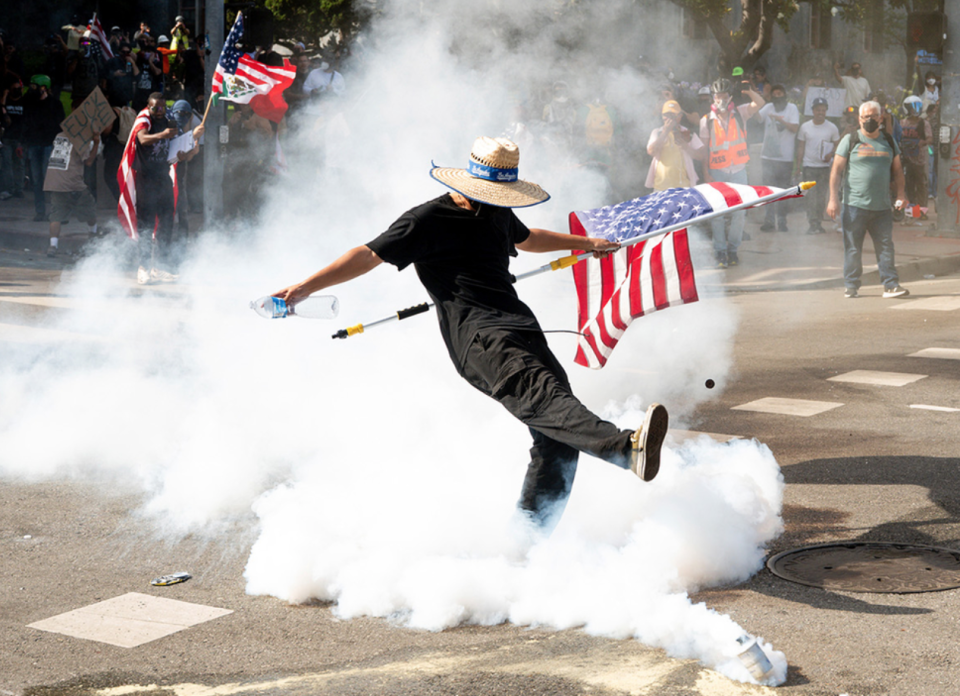
So, on this No Kings Day, Americans are out protesting against the madness our forebears predicted and historians such as Whalen shed light on.
And yet, many of those who will protest today will have also voted for this president twice despite all the symptoms and measures of madness being evident. Why? Did they think he was just joking, or did they believe his television credentials entitled him to behave in reckless, shameful ways?
Since Whalen’s speech was delivered 22 years ago, it couldn’t answer that question for us, but he did speak about the antidote to such madness.
“Virtue is the antidote,” he said. “Today, virtue is a markedly anemic word. Virtue sounds prissy and prudish, gelatinous and spineless. But to our 18th century ancestors, virtue was a crucial term, for only virtue could counter power, appetite, and madness.”
He reminds us that the most remarkable event in our early history was not the victory of the American Revolution or of Washington’s coming to power as President, but of Washington’s surrender of power after two terms in office.
Concluding his speech, he said, “Virtue meant a love of liberty rather than a love of power. It meant as well a self-conscious repudiation of luxury, an option for simplicity, a recognition that restraining appetite is not a private but a public good, nay, they would say, not only a public good, but a public necessity. And finally, virtue means not only a regard for truth but a passion for truth.”
Being No Kings Day, I couldn’t help but wonder what our founding fathers would be doing if they were in our shoes. Would they feel it’s enough to take to the streets and protest?
Whalen may have answered that for us by highlighting these simple truths our forebears lived by:
Generosity is better than mean-spiritedness.
Courage is better than cowardice.
Kindness is better than cruelty.
Healing is better than wounding.
Industry is better than sloth.
Fidelity is better than faithlessness.
Life is better than death.
Truths are better than lies.
Protest is a symbolic activity. If peaceful, it can be healing because, for the time being, it still gets press.
More permanent, perhaps, is the greater act of living by the truths mentioned above and holding our leaders accountable to them. It’s daily work that’s worth doing, and it’s the work of being a good citizen. It also teaches our children through example. Added up, it’s the best display of love for country I can think of.
Slipstream
Our country is very ill with excessive power, appetite, and madness. Our government exhibits them all, and therefore, the people suffer the consequences. I pray for a breakthrough and release from this insidious plague.
Evangel
We need a return to grace. We can't wait on a corrupted, soulless system of government to do that on any level. It's too busy spitting out the next generation of obsequious goons. We the people need to tap into our own wisdom and the grace of God—and act on it.
Wilsons Grave
I gotta say, this was an interesting piece of history because back then our founders got the danger of those 3 ills and tried to prevent them from mucking up our new nation. The simple truths they lived by, I'd bet, took as much effort as they ever have, and I doubt today's Americans are unaware of them. I just think this president has branded his own style of presidential behavior glorifying the 3 ills, and his fans are cheerfully going along for the fun ride and doing the same in their own lives.
Homeless Valley
I wonder what in history might have turned our social values around to the point of dissing virtues and, worse, respecting someone's financial worth regardless of how dishonorably they acquired their money. Thanks for your post. I enjoyed learning about the three ills in our history.
Well Street
Thank you for this valuable history lesson.
Whalen's quote about the threat power poses to liberty made me think of Musk. I listened to a podcast discussion about how much more power he'll possess as he stands at the threshold of becoming the first trillionaire. If the commentator's assessment is correct, Musk could purchase many key politicians and become the government's ultimate puppetmaster.