




A Church Journeying Through Human History

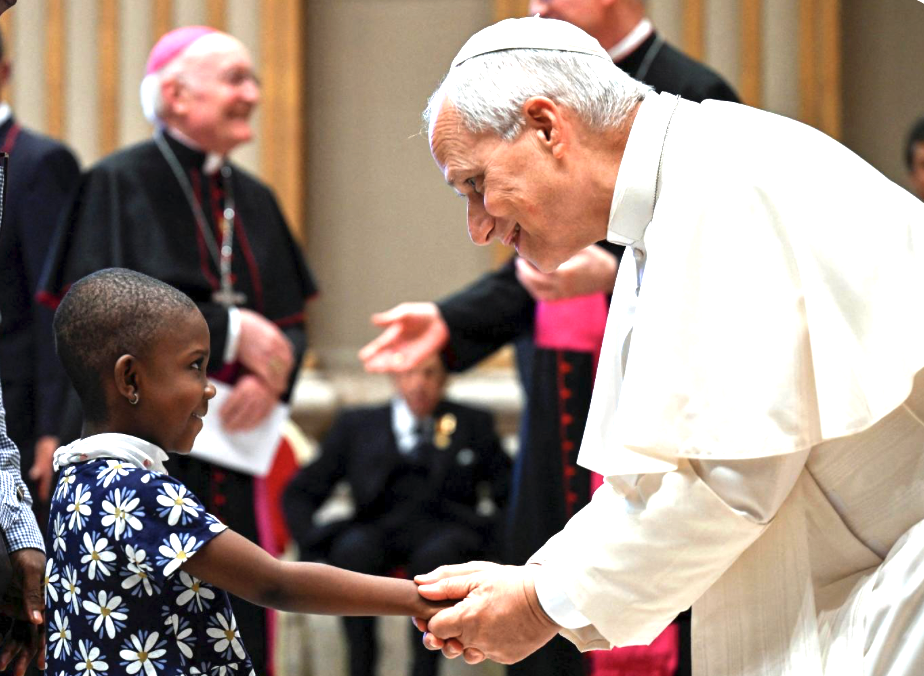
In my previous post, Pope Leo asked us to lovingly safeguard the grandeur of humanity and appealed to us to remain deeply human.
In this next excerpt from his Encyclical letter, he affirms as essential the Church's role in promoting the dignity of every person so that the promise of peace and justice prevails, along with the cohesion of communities.
Unity For The Entire Human Family
The Church is present in the world as a sign of unity for the entire human family. She recognizes today’s questions and challenges as the current setting in which to carry out her particular vocation of listening, dialogue and service, and of being responsive to everything concerning the lives of contemporary men and women.
This involvement in people’s lives helps the Church understand ever more clearly that her mission has a historical scope and entails a responsibility for the way in which social relations are built. For this reason, she cannot consider herself a stranger to the forces shaping society. On the contrary, the Church actively participates in the processes by which society grows and is organized, and she offers her own contribution to the creation of a more just and fraternal society.
Pope Francis emphasized this historical dimension of the Church’s mission: “No one can demand that religion should be relegated to the inner sanctum of personal life, without influence on societal and national life, without concern for the soundness of civil institutions, without a right to offer an opinion on events affecting society.”
The Church’s vocation and duty to accompany humanity in the specifics of history leads her to recognize that earthly realities possess their own proper character and order. The Second Vatican Council expressed this principle in the Pastoral Constitution Gaudium et Spes: “If by the autonomy of earthly affairs is meant that created things and societies themselves enjoy their own laws and values… then the demand for autonomy is perfectly in order.”
This affirmation shows that creation bears the imprint of an original goodness that our human outlook must preserve, cultivate and bring to fulfillment. In this regard, the Church offers herself in a way that helps to interpret reality in all its depth. She supports with humble firmness the choices that promote the dignity of every person, the cohesion of communities and the good of all. The Church thus stands alongside the world without overpowering it, so that the promise of justice and peace that the Holy Spirit continues to sustain in the heart of humanity may come to fruition in every human endeavor.
(This is an excerpt from Magnifica Humanitas, the Encyclical Letter of Pope Leo XIV. It follows the previous excerpt and has been edited for brevity.)